
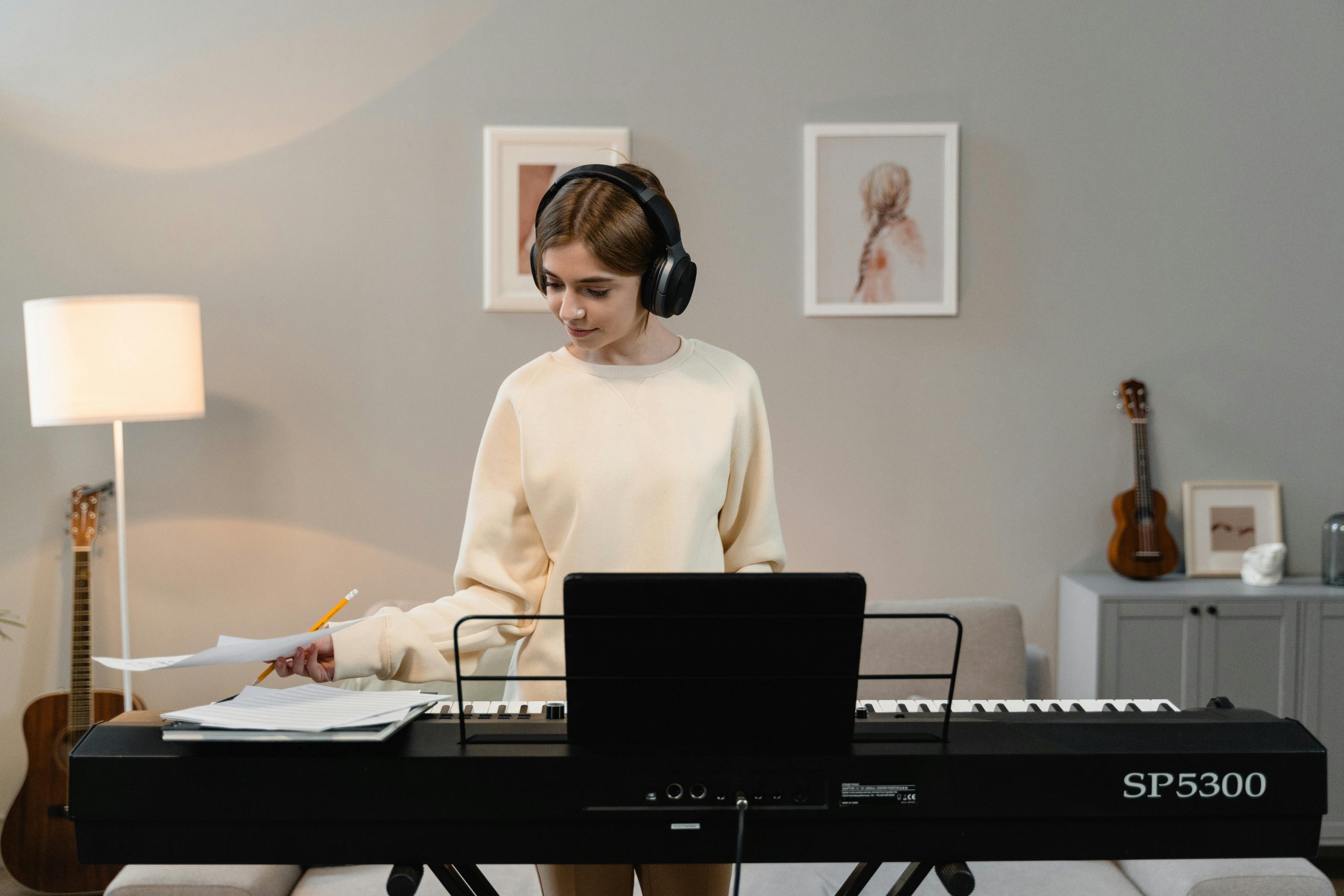

“My child won’t practice!”
This is the most prevalent concern expressed by parents. After years of examination, hundreds of students discovered what works for home practice and what doesn’t.
Here are seven tried-and-true tactics for turning practice from a daily struggle into a fruitful routine.
Strategy 1: Consistency Over Duration
The Mistake: Practicing one hour on Sunday and nothing the rest of the week.
What Works: 15 minutes daily beats one 90-minute marathon session.
Why It Works:
- Muscle memory develops through repetition
- Skills compound with daily practice
- Shorter sessions maintain focus
- Daily routine becomes automatic habit
Age-Appropriate Duration:
- Ages 5-7: 10-15 minutes daily
- Ages 8-12: 20-30 minutes daily
- Ages 13-18: 30-45 minutes daily
- Adults: 30-60 minutes (flexible)
Pro Tip: Set a timer. When it dings, practice ends even if mid-song. This prevents burnout and keeps practice positive.
Strategy 2: Schedule Like School
The Mistake: “Practice sometime before bed.”
What Works: Same time, same place, every day.
Why It Works:
- Removes daily decision-making
- Becomes automatic routine
- Reduces resistance
- Creates structure and expectation
Best Practice Times:
- Morning: Before school (for morning people)
- After School: Before other activities begin
- Before Dinner: Natural break in the day
- After Dinner: If evenings work better
Pro Tip: Link practice to another daily habit: “Right after breakfast” or “Before screen time.”
Strategy 3: Create a Practice-Friendly Space
The Mistake: Instrument tucked away in a case or closet.
What Works: Instrument visible, accessible, inviting.
Setup for Success:
- Instrument on stand, ready to play
- Music stand at correct height
- Good lighting
- Minimal distractions
- Comfortable temperature
- Sheet music organized
Pro Tip: The easier it is to start, the more likely practice happens. Remove all barriers.
Strategy 4: Use the Practice Sandwich Method
Structure Every Practice This Way:
1. Warm-Up (3-5 minutes)
- Favorite easy song
- Scales or exercises (make it fun)
- Something they already know well
2. Challenge Work (10-15 minutes)
- New pieces or techniques
- Teacher’s assigned practice goals
- Problem-solving difficult passages
3. Fun Finish (3-5 minutes)
- Favorite songs
- Improvisation
- “Free play” time
- End on success note
Why It Works:
- Starts positive (not daunting)
- Gets hard work done mid-session
- Ends with enjoyment (want to return tomorrow)
Strategy 5: Break Down the Big Stuff
The Mistake: “Practice your new song” (too vague, too overwhelming).
What Works: Specific, manageable mini-goals.
Better Practice Goals:
- “Practice measures 5-8 five times”
- “Get the rhythm right in the chorus”
- “Play the left hand part slowly three times”
- “Master the first line perfectly”
How to Break It Down:
- Identify the challenging section
- Isolate it (just those measures)
- Practice slowly (speed comes later)
- Repeat until comfortable
- Gradually increase tempo
- Integrate back into full piece
Pro Tip: Celebrate small wins. “You nailed those four measures!” builds confidence.
Strategy 6: Make It Fun (Seriously)
Practice Doesn’t Have to Be Boring:
Games & Challenges:
- Beat the Timer: How many perfect repetitions in 5 minutes?
- Slow Motion Challenge: Can you play it perfectly at half speed?
- Performance Practice: Pretend you’re on stage, play like it counts
- Recording Session: Record yourself, listen back, identify improvements
- Teaching Game: Student teaches teddy bear/sibling the piece
Rewards (Not Bribes):
- Sticker chart for daily practice
- Special song choice after completing week
- Mini-concert for family on Friday
- Choice of weekend activity after consistent practice
Pro Tip: Rewards should celebrate effort and consistency, not perfection.
Strategy 7: Know When NOT to Practice
The Mistake: Forcing practice when child is exhausted, sick, or melting down.
What Works: Flexibility with firm boundaries.
Acceptable Reasons to Skip:
- Genuine illness
- Unusually stressful day
- Family emergency
- Occasional mental health day
Not Acceptable:
- “I don’t feel like it” (daily excuse)
- Homework (should be scheduled around)
- Screen time (practice comes first)
- Social plans (plan around practice)
Make-Up Strategy: Missed Monday? Add 5 minutes to the rest of the week.
Pro Tip: One planned “skip day” per week can actually increase compliance the other six days.
Bonus: What Teachers Wish Parents Knew
We Notice:
- When students practice consistently (huge progress)
- When practice hasn’t happened (we can always tell)
- When parents support practice routines (students thrive)
We Need:
- Partnership, not perfection
- Consistency, not marathon sessions
- Communication when struggles arise
We Want:
- Students to enjoy their instrument
- Families to reduce stress around practice
- Long-term love of music
The Truth About Practice
Here’s what years of teaching have taught us:
Students who practice 15 minutes daily progress faster than students who practice 2 hours weekly.
It’s not about talent. It’s not about expensive instruments. It’s about consistent, supported practice habits.
And here’s the secret: Once the habit is established (usually 4-6 weeks), practice becomes easier. The resistance fades. The routine becomes normal.
Common Practice Challenges & Solutions
Challenge: “My child says practice is boring”
Solution: Mix repertoire. 70% assigned work, 30% their choice
Challenge: “We fight every single day”
Solution: Remove yourself. Set timer, let them practice independently
Challenge: “They practice but don’t improve”
Solution: Practice quality over quantity. Talk to teacher about focus areas
Challenge: “Too busy with school/activities”
Solution: 10 minutes is better than zero. Adjust expectations but maintain routine
Challenge: “Lost motivation after initial excitement”
Solution: Normal! Push through with consistency. Interest often returns around 3-month mark
Your Action Plan
This Week:
- Set consistent practice time
- Prepare practice space
- Discuss with child: “Let’s try 15 minutes daily for one week”
- Use timer and practice sandwich method
- Celebrate daily completion
This Month:
- Track practice on calendar (visual progress)
- Communicate with teacher about challenges
- Adjust timing/approach as needed
- Celebrate 4-week milestone
- Reassess and continue
Remember: The goal isn’t perfection. The goal is progress, consistency, and joy in music-making.
Need Support?
At Gigsquare Arts Academy, we partner with families to make practice successful:
- Clear practice goals from teachers
- Communication about challenges
- Strategies tailored to individual students
- Celebration of progress